.svg)
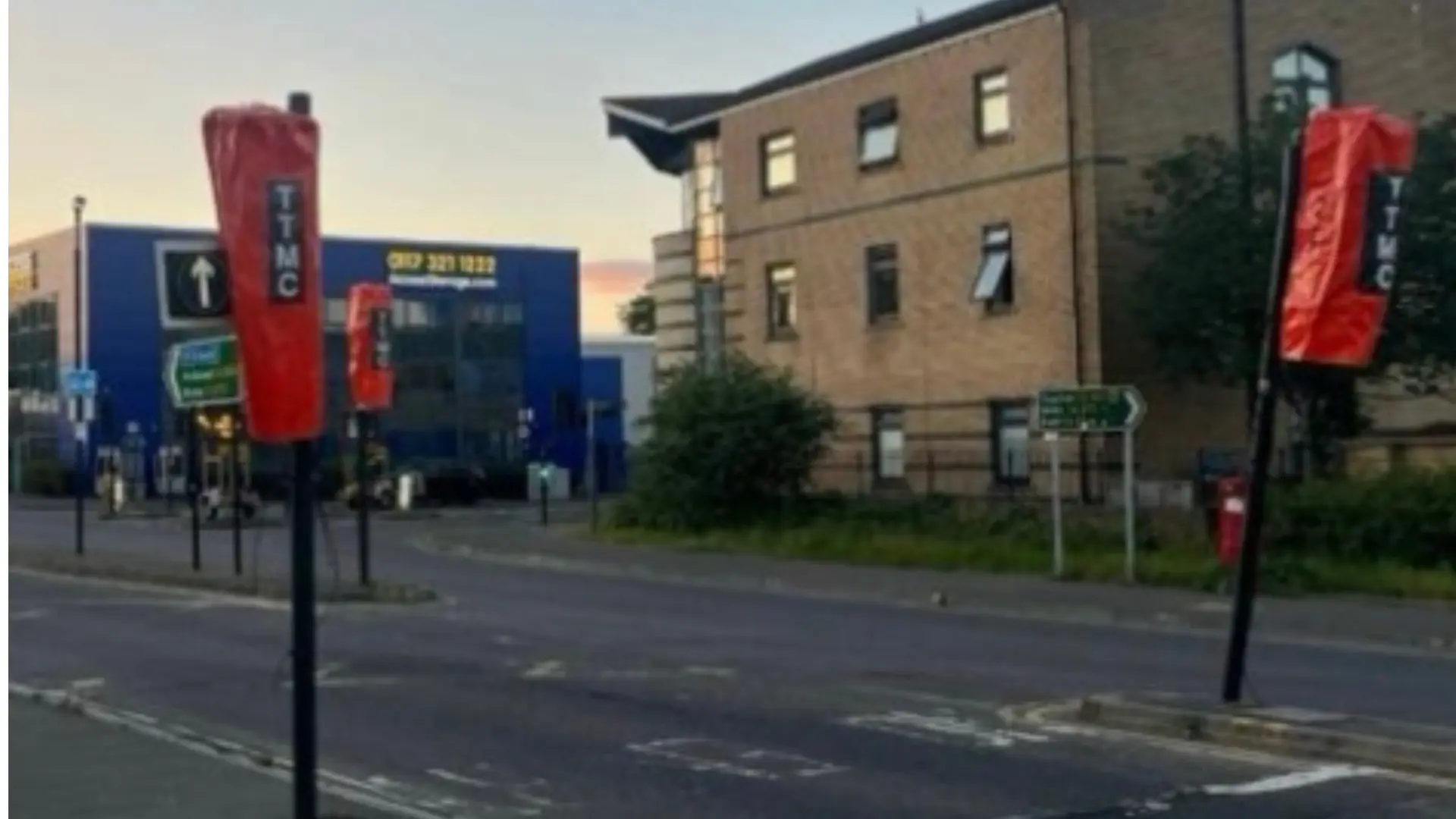
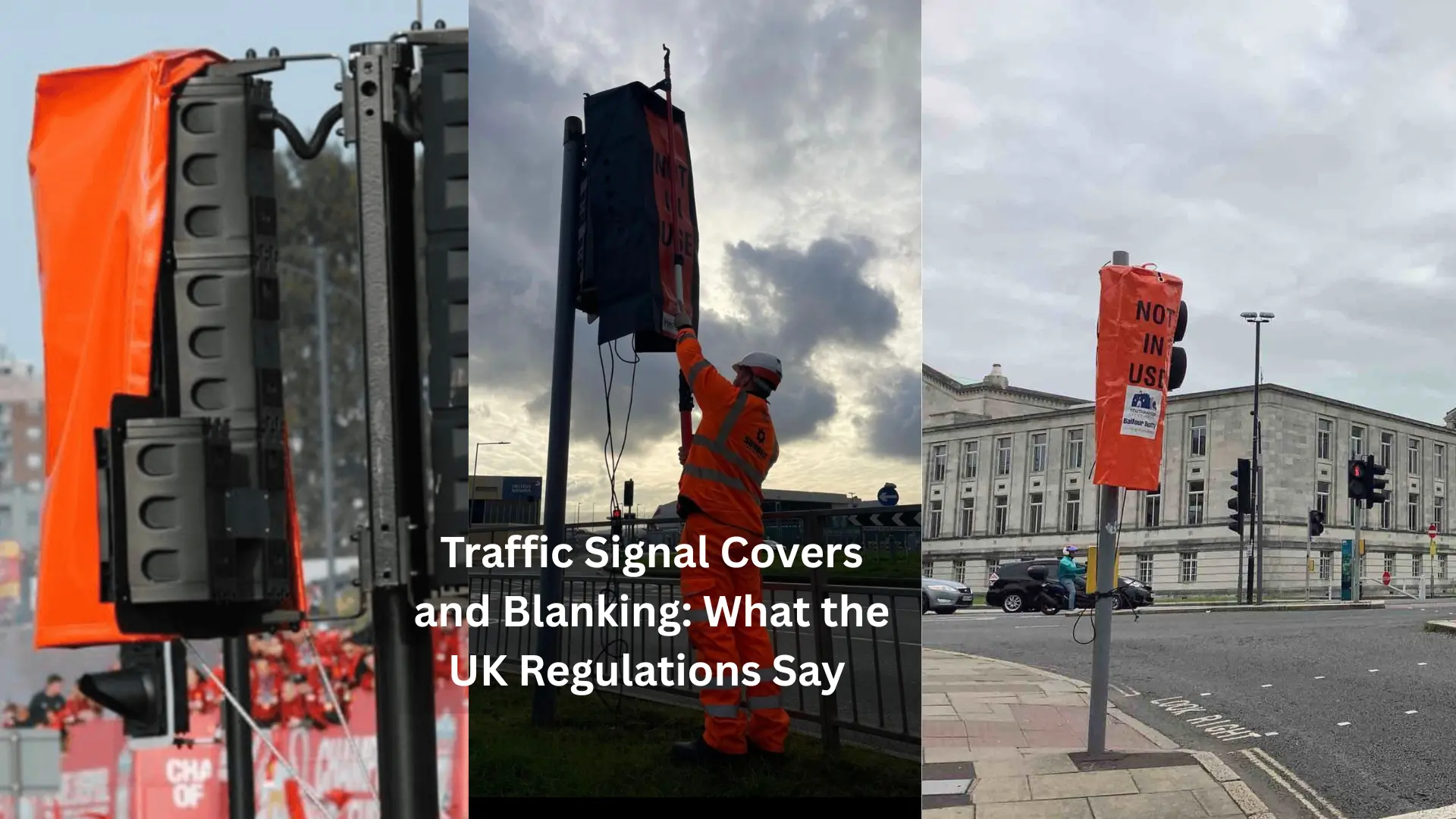
Traffic signal covers, or bags, are placed over signal heads during maintenance or when signals are out of service to prevent driver confusion. Without a cover, a dark or non-operational signal head can cause drivers to misread the junction, creating a serious road safety hazard. Cover Me by IRSS UK eliminates the need for ladders to fit them, making bagging off faster, safer, and fully compliant with UK working at height legislation.
What Are Traffic Light Covers and Why Are They Used?
Traffic light covers, commonly called signal bags or bagging-off covers, are opaque fabric covers placed over signal heads to indicate that a signal is inactive. Their purpose is straightforward: a covered signal communicates clearly to road users that the head should be ignored. Without a cover, an unlit signal could be mistaken for a fault, cause hesitation, or lead to a collision at the junction.
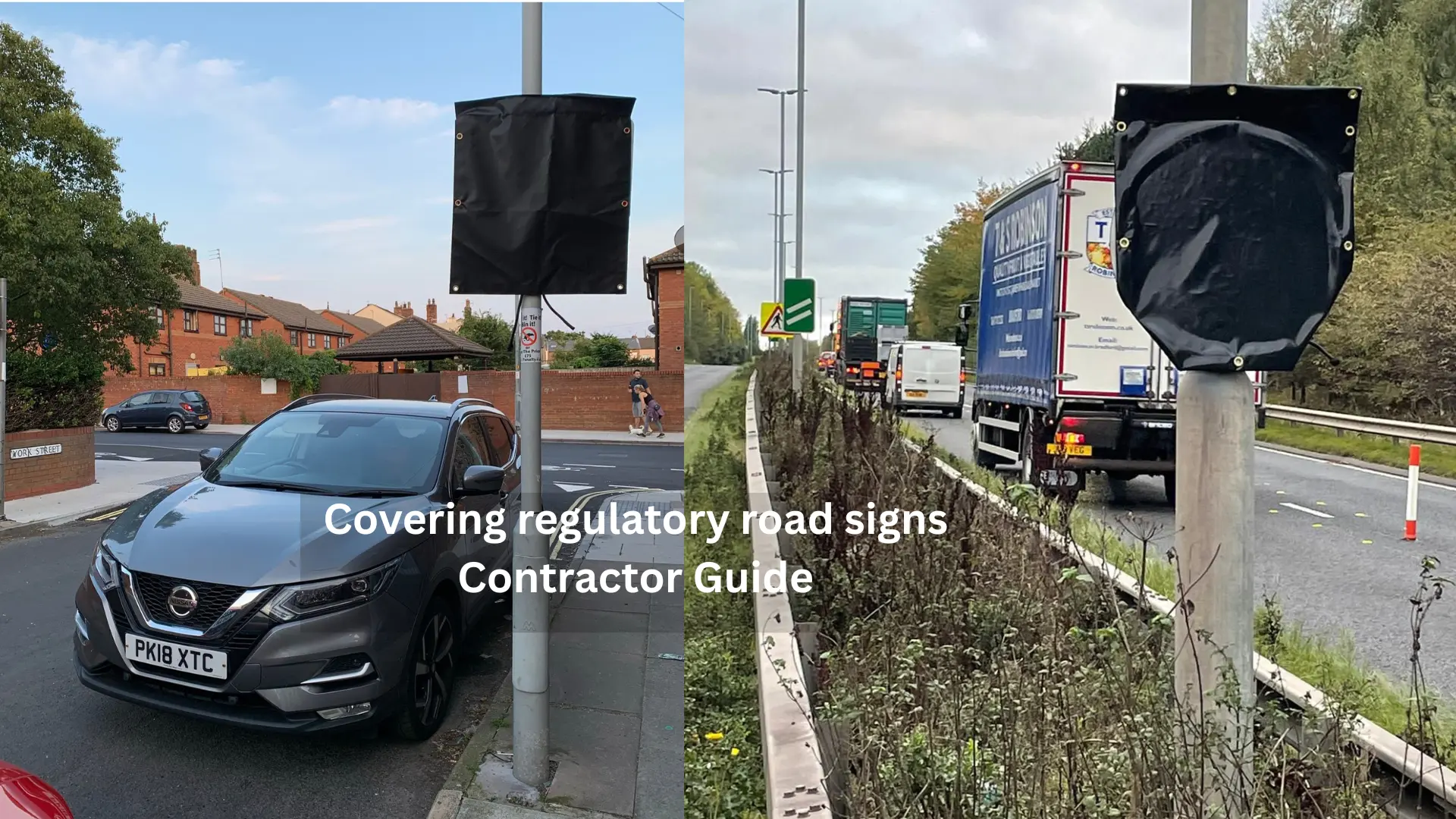
Covers are used in a range of situations including planned maintenance, temporary traffic management schemes, roadworks where existing signals conflict with a temporary layout, and emergency fault scenarios. In all cases, the bag must be sufficiently opaque to completely mask the signal face, in line with ARTSM guidance on bagging and switch-off of signals.
The requirement to bag off signals is not merely best practice. It sits within a framework of duties under the Traffic Signs Regulations and General Directions 2016 (TSRGD) and Chapter 8 of the Traffic Signs Manual, which governs the signing, lighting, and guarding of road works and temporary situations across the UK.
UK Regulations and Standards for Bagging Off Traffic Signals
In the UK, the management of traffic signals during works is governed by several overlapping frameworks. Chapter 8 of the Traffic Signs Manual — published by the Department for Transport, sets the standard for temporary traffic management, including the requirements for covering signals that are out of phase or inactive during a scheme.
The Association of Road Traffic Signal Manufacturers (ARTSM) has published dedicated guidance on the bagging and switch-off of signals, which is the definitive industry reference for operatives and traffic management contractors. This guidance specifies that bags must be sufficiently opaque so that signal indications cannot be seen, and that the decision to switch off or bag signals should be planned from the outset and identified in the works risk assessment.
For companies working on public highways, compliance with the Work at Height Regulations 2005, enforced by the Health and Safety Executive (HSE), is also mandatory. Traditional ladder-based methods of fitting signal bags place operatives at height on an active roadside, which represents a foreseeable and preventable risk. Falls from height accounted for 50 worker fatalities in the UK in 2023/24 and remain the leading cause of workplace deaths in construction. The HSE requires employers to use the right type of equipment to eliminate or reduce working at height risks wherever reasonably practicable.

How Cover Me Eliminates Ladders When Bagging Off Traffic Signals
For over 30 years, the standard method of bagging off traffic signals involved erecting ladders beside the signal pole and manually placing the cover over the signal head , an operation that required ladder-trained operatives, took several minutes per head, and exposed workers to fall risk on busy roadsides.
Cover Me, developed by Peter Hoban, a 25-year highways industry veteran and inventor, is a patented system that removes ladders from the process entirely. Using a simple extension pole and a specially engineered locking mechanism, a single operative can fit a Cover Me signal bag from ground level in around 30 seconds per signal head. Removal is even faster: the locking point allows the pole to release the bag in seconds without any climbing.
Because no ladder is used, Cover Me directly addresses the working at height risk that has historically been accepted as unavoidable in bagging-off operations. Operatives no longer require ladder training for this task, which also widens the pool of qualified workers available to a traffic management contractor. Cover Me bags are recyclable, meeting the growing demand for environmentally responsible highway products.
IRSS UK, the company behind Cover Me, contributes to national best practice guidance on bagging off, and the system is in active use across the UK with major highways contractors and local authorities.
Common Questions About Traffic Signal Covers
Why do traffic lights get covered during roadworks?
When roadworks introduce temporary signals that take over junction control, existing permanent signals are covered to avoid confusing drivers with conflicting instructions. The cover clearly signals to road users that the head is inactive and should be disregarded.
Is it a legal requirement to cover traffic signals during maintenance?
Yes. Covering inactive signal heads is required under the Traffic Signs Regulations and General Directions 2016 and is specified in Chapter 8 of the Traffic Signs Manual. The ARTSM guidance on bagging and switch-off of signals provides the operational detail that contractors must follow.
Do you need a ladder to fit traffic signal covers?
Traditionally, yes, but not any more. The Cover Me system from IRSS UK allows signal bags to be fitted and removed from ground level using an extension pole, eliminating the need for ladders entirely and removing the associated working at height risk.
How long does it take to fit a traffic signal cover?
Using the Cover Me ground level system, a single operative can fit a signal bag in approximately 30 seconds per head. Removal is even faster. Traditional ladder-based methods are significantly slower and require two operatives in most cases.
Why Getting Bagging Off Right Matters
A poorly fitted, missing, or insufficiently opaque signal cover is not a minor oversight, it is a road safety risk. An unmasked inactive signal head can confuse drivers at complex junctions and may contribute directly to an incident. Traffic management contractors carry liability for the correct implementation of temporary schemes under the applicable code of practice.
Beyond compliance, the safety of operatives fitting covers deserves equal weight. Falls from height are the single biggest cause of fatal workplace injuries in the UK, and roadside ladder work amplifies that risk with the added hazard of proximity to live traffic. The Work at Height Regulations 2005 place a clear duty on employers to eliminate working at height risks where this is reasonably practicable, and with systems like Cover Me available, fitting signal bags from the ground is now entirely achievable.
Conclusion
Traffic signal covers are a critical and legally required element of safe temporary traffic management in the UK. They protect road users from confusion and are mandated under TSRGD, Chapter 8, and ARTSM guidance. The historic challenge has been fitting them safely, a task that carried an inherent working at height risk for three decades.
Cover Me from IRSS UK has resolved that challenge. By eliminating ladders from the bagging-off process, it protects operatives, speeds up site operations, and makes compliance with the Work at Height Regulations 2005 straightforward. To find out more, visit the CoverMe Traffic Light Covers product page.