.svg)
Traffic management compliance in the UK is governed by a layered framework of legislation, codes of practice, and industry guidance that every highways contractor, local authority, and traffic management operative must understand and apply on every scheme. At the heart of this framework sits the Traffic Management Act 2004, supported by the New Roads and Street Works Act 1991, Chapter 8 of the Traffic Signs Manual, CDM Regulations 2015, and the Working at Height Regulations 2005. Getting compliance right is not optional, it is a legal duty, and the consequences of failure range from fixed penalty notices to criminal prosecution.
IRSS UK, whose founder Peter Hoban co-authored ARTSM's national guidance on bagging off traffic signals, has spent over 25 years helping contractors and local authorities meet these obligations safely and efficiently.
What UK Traffic Management Compliance Actually Requires
Traffic management compliance means meeting every applicable legal obligation before, during, and after works on the public highway. It is not simply a matter of putting out cones.
The compliance framework covers five core areas:
1. Network management duty. Under Section 16 of the Traffic Management Act 2004, every local traffic authority has a statutory duty to manage their road network with the objective of securing the expeditious movement of traffic. This duty flows directly to contractors working on their behalf. Works that create unnecessary delay, unsafe conditions, or poor coordination are not just operationally poor, they put the authority in breach of its statutory obligation.
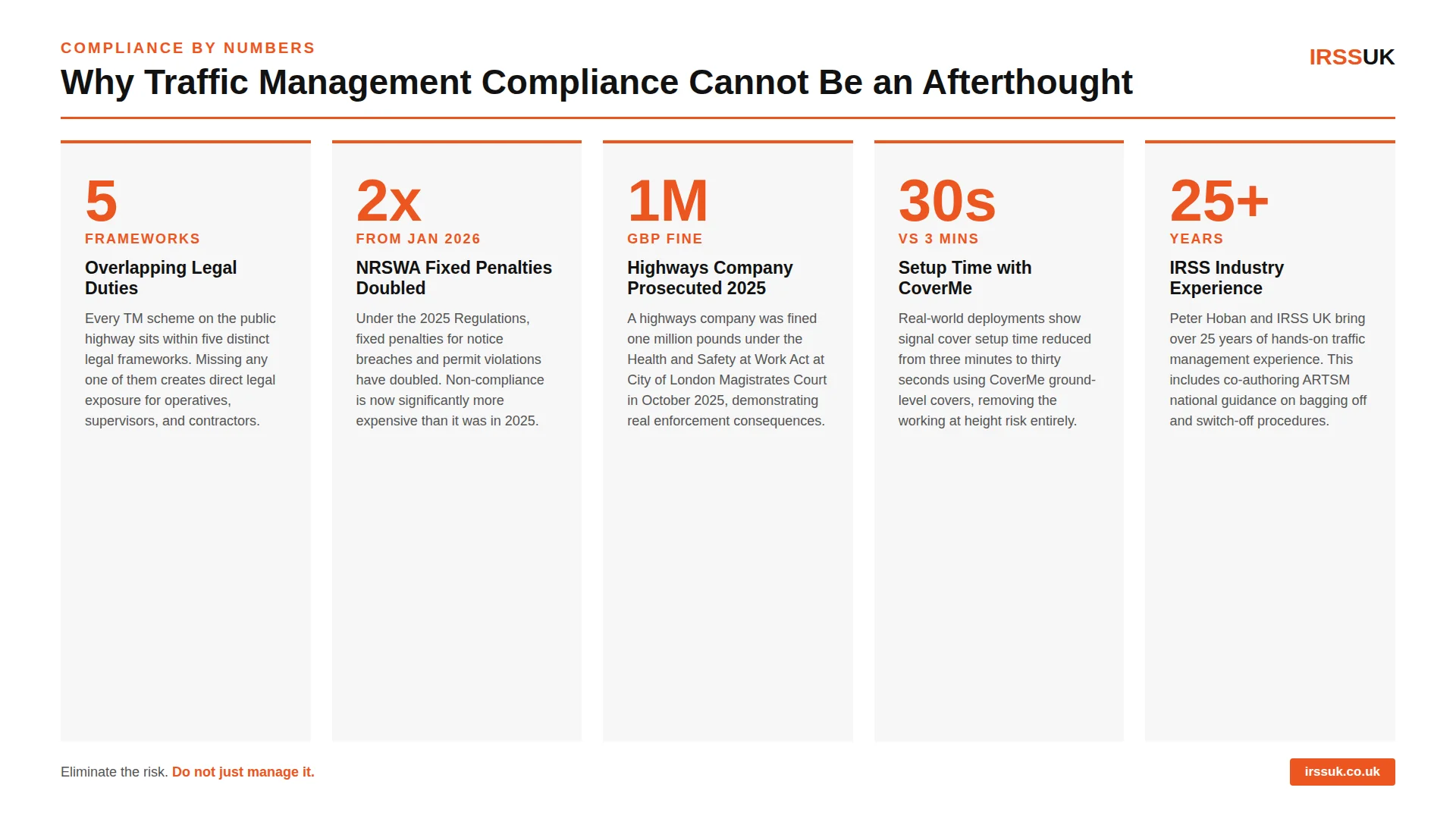
2. Street works regulation. The New Roads and Street Works Act 1991 (NRSWA) governs all excavation and works on public highways. It requires qualified and accredited operatives and supervisors on every site, advance notice to the highway authority, safe reinstatement, and compliance with the Safety at Street Works and Road Works Code of Practice, universally known as the Red Book. As of 5 January 2026, fixed penalties for notice breaches and permit violations have doubled under the Street and Road Works (Charges and Penalties) (Amendments) (England) Regulations 2025, making non-compliance considerably more expensive.
3. Chapter 8 compliance. Chapter 8 of the Traffic Signs Manual sets the industry standard for signing, lighting, and guarding of roadworks and temporary situations. While not a statutory instrument in England, compliance with Chapter 8 is required by local authorities as a condition of contract and is consistently cited by courts and the HSE as the benchmark for what constitutes safe traffic management. Failure to comply with Chapter 8, and an accident occurring as a result, can result in prosecution under the Health and Safety at Work Act 1974.
4. CDM Regulations 2015. The Construction (Design and Management) Regulations 2015 apply to most roadworks schemes. They place legal duties on clients, designers, and principal contractors to plan, manage, and monitor health and safety throughout every stage of a project. Under CDM, operatives working at height must have a suitable and sufficient risk assessment in place before work begins.
5. Working at Height Regulations 2005. These regulations apply directly to bagging off operations. Where operatives are required to access signal heads at height using ladders or elevated platforms, the Work at Height Regulations 2005 require that the risk is properly assessed, and critically, that working at height is eliminated wherever reasonably practicable. This is not guidance. It is the law.
The Legal Hierarchy: Who Is Responsible for What
Understanding who bears legal responsibility on a live scheme is essential for every party in the chain.
Local traffic authorities hold the network management duty under the Traffic Management Act 2004. They are responsible for coordinating works, issuing permits, and ensuring their contractors operate within the legal framework.
Principal contractors bear responsibility under CDM 2015 for the overall safety of the construction phase. They must maintain a Construction Phase Plan and ensure all subcontractors comply with their own legal obligations.
Traffic management operatives and supervisors are responsible for their individual compliance with NRSWA, Chapter 8, the Red Book, and any site-specific risk assessments. A supervisor with a valid NRSWA qualification who fails to apply the standards on site is not protected by their certification alone, conduct matters.
Contractors carrying out bagging off carry specific duties under the Work at Height Regulations 2005. The hierarchy of control is clear: eliminate the risk first, then substitute, then control. Using a ladder to bag a traffic signal when a ground-level system is available and practicable is not a legally defensible position if an incident occurs.
What the ARTSM Guidance Adds
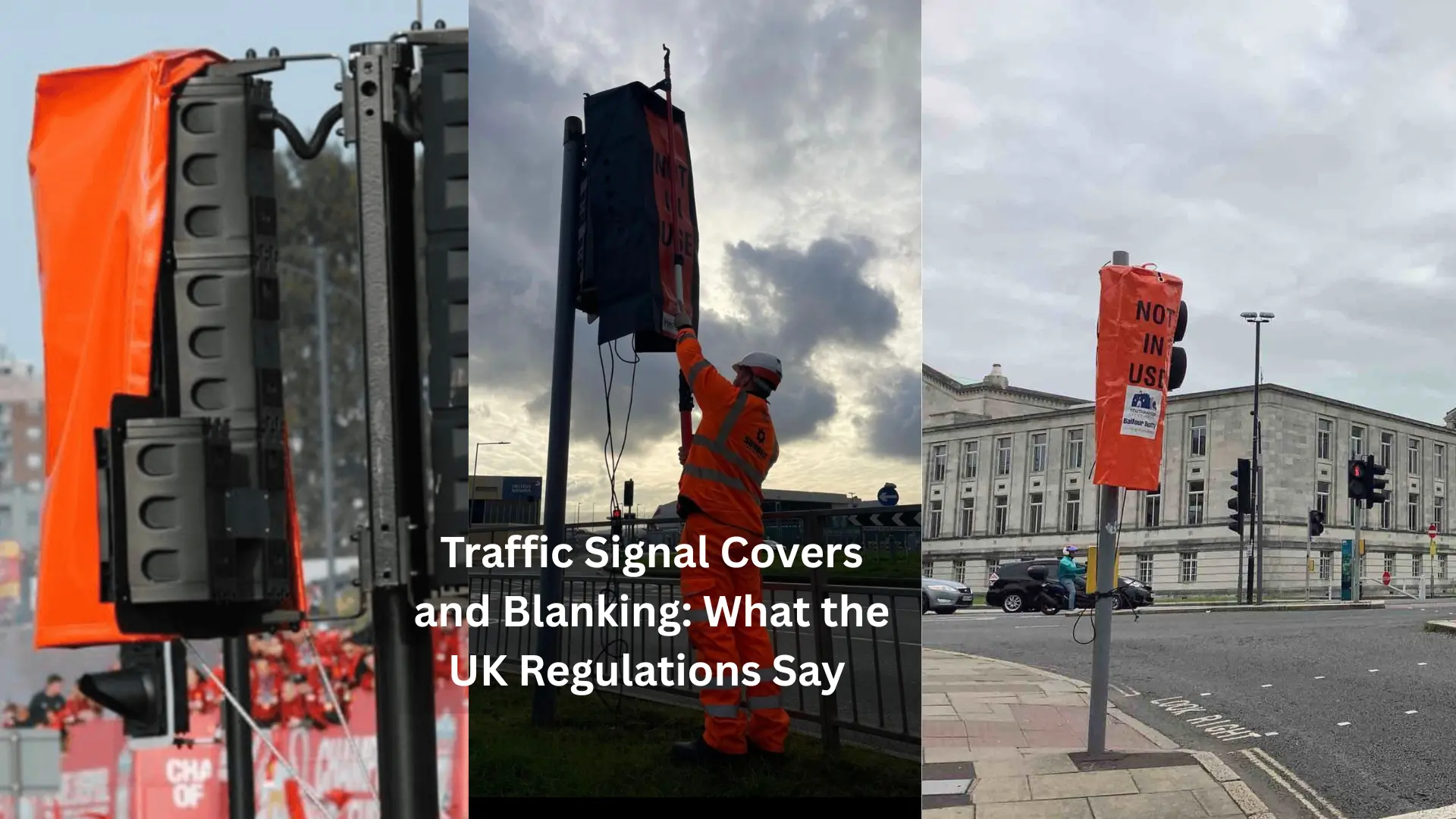
The Association of Road Traffic Safety and Management (ARTSM), with direct input from Peter Hoban of IRSS UK, has published specific guidance on bagging and switching off electrical equipment at works. This guidance draws on Chapter 8 of the Traffic Signs Manual 2009 (D5.10.13) and Chapter 6 of the Traffic Signs Manual 2019 (Section 27.1.1), both of which require that traffic signal heads not in use are bagged with sufficiently opaque covers so that signal aspects do not show through when lit.
The ARTSM guidance adds important operational context: it sets out the risks of ineffective bagging, the obligations to switch off permanent signals before covering them, and the requirement to communicate with the local authority before any switch off is carried out. It also explicitly addresses the modern complication of Bluetooth-enabled signal equipment, which may continue to interact with road user devices even when physically covered.
This guidance is not aspirational. ARTSM states clearly that acts of omission, failing to switch off, failing to bag adequately, failing to assess for accessible technologies, can constitute negligence under UK law.

Where Compliance Gaps Most Commonly Occur
In practice, the compliance gaps that create the greatest risk on live schemes fall into four areas:
Bagging off without switching off. Signal aspects can show through inadequate covers, creating green conflict risk and confusing road users — particularly pedestrians who rely on audible or tactile signals.
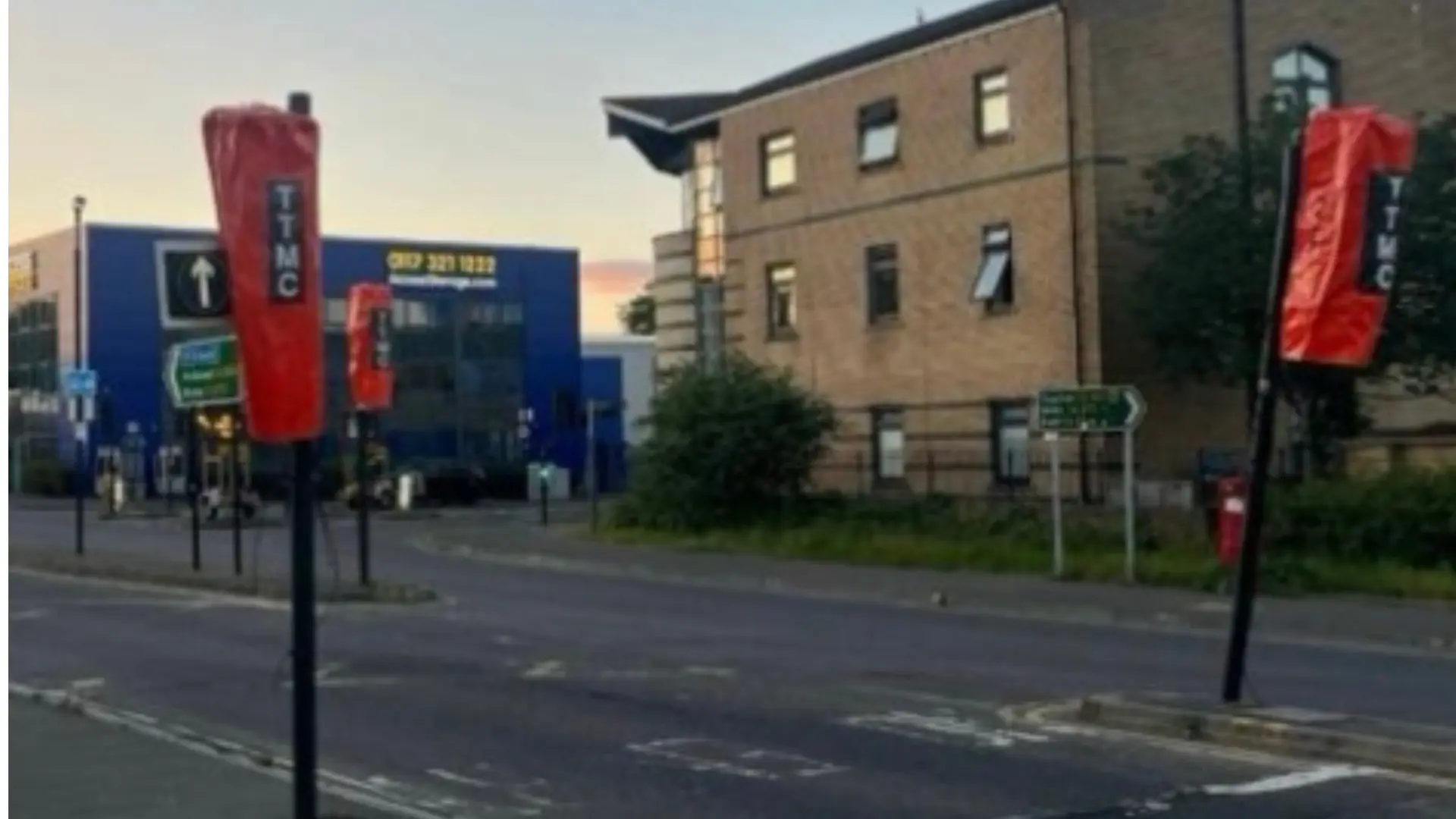
Working at height without elimination. Where operatives use ladders to access signal heads, the Work at Height Regulations 2005 require that this risk is assessed and, where reasonably practicable, eliminated. CoverMe traffic light covers from IRSS UK allow teams to bag off signals from ground level without any ladder access, removing the working at height risk entirely.
Inadequate notice and coordination. NRSWA requires advance notice to the highway authority and coordination of overlapping works. Late notice, or failure to coordinate, results in Fixed Penalty Notices and can trigger lane rental charges.
Poor reinstatement. Substandard reinstatement of excavated highway is one of the most common causes of enforcement action under NRSWA. Highway authorities have the power to open up and re-examine reinstatement up to two years after completion.
Common Questions
Q: Is Chapter 8 a legal requirement in the UK?
Chapter 8 is not a statutory instrument in England, but local authorities routinely require compliance as a condition of contract. Failure to comply with Chapter 8 , and an accident resulting from that failure, creates significant legal exposure under the Health and Safety at Work Act 1974 and the Road Traffic Regulation Act 1984. In practice, Chapter 8 compliance is treated as mandatory on any scheme on the public highway.
Q: What are the penalties for NRSWA non-compliance?
From 5 January 2026, fixed penalties for notice breaches and permit violations have doubled under the Street and Road Works (Charges and Penalties) (Amendments) (England) Regulations 2025. Beyond fixed penalties, non-compliant works can be stopped by the highway authority, and contractors face potential prosecution for serious breaches. A highways company was fined £1 million under the Health and Safety at Work Act at City of London Magistrates' Court in October 2025.
Q: Do the Working at Height Regulations 2005 apply to bagging off traffic signals?
Yes. Where operatives are required to access signal heads at height, the Work at Height Regulations 2005 apply in full. The regulations require that working at height is eliminated wherever reasonably practicable. Where ground-level bagging systems are available and operationally suitable, their use is the compliant approach. Using a ladder when a safe alternative exists weakens a contractor's position significantly in any enforcement or civil action.
Q: Who is responsible for switching off permanent signals before bagging?
Communication with the local authority must be undertaken before switching off permanent signal equipment. This applies in emergency cases as well as scheduled works. The decision not to switch off cannot be made by a site operative, it must be evidenced in the works risk assessment.
Q: What does CDM 2015 require specifically for traffic management works?
CDM 2015 requires clients to appoint a Principal Designer and Principal Contractor where the project is notifiable. It requires a written Construction Phase Plan before work begins, and health and safety files to be maintained throughout. For traffic management works, CDM dovetails with the Work at Height Regulations 2005, risk assessments must specifically address any elevation access involved in the works setup.
The Case for Getting Compliance Right First Time
The financial and reputational consequences of traffic management non-compliance are significant and growing. With doubled fixed penalties from January 2026, increased HSE scrutiny of working at height incidents, and highway authorities empowered under the Traffic Management Act 2004 to direct and stop non-compliant works, the tolerance for procedural shortcuts has narrowed considerably.
Beyond fines, the human cost of non-compliance is the more important consideration. Falls from height remain one of the leading causes of death and serious injury in construction. In the traffic management sector specifically, inadequate bagging creates real risk of green conflict, a signal showing a contradictory aspect to a live portable signal, with consequences for every road user approaching the junction.
IRSS UK's commitment to compliance goes beyond products. Peter Hoban's was part of a working group helping to bring about change to make it safer and clearer under ARTSM guidance on bagging off and switch-off procedures reflects a practical, site-level understanding of where the legal framework meets the daily reality of works on the public highway. CoverMe traffic light covers are designed precisely to meet the compliance obligations that the regulations demand: complete, opaque coverage from ground level, eliminating the working at height risk entirely while satisfying the bagging requirements of Chapter 8 and the ARTSM guidance.
To explore how IRSS UK's CoverMe system helps your team meet its bagging off compliance obligations, visit our CoverMe traffic light covers page or speak to Peter Hoban's team directly.
Author Bio: Peter Hoban is the founder of IRSS UK and inventor of the CoverMe ladder-free bagging off system. With over 25 years of experience in traffic management and road safety, Peter co-authored ARTSM's national guidance on bagging and switching off electrical equipment at road works. He is recognised across the industry as a leading authority on working at height elimination in the highways sector. Learn more about IRSS UK's commitment to worker safety and sustainability.