.svg)
Taking a traffic signal out of service near a live railway level crossing or a high footfall event corridor is a high-consequence job. Get the timing wrong and you either extend a road closure unnecessarily or leave a signal live when it shouldn't be. Get the method wrong, specifically sending someone up a ladder to reach it, and you've added a working at height risk to an already safety critical environment. IRSS UK, collaborator of the ARTSM national guidance on bagging and switch off of signals, sets out what's required and what a compliant, ladder-free approach looks like in practice.
What You Need to Know
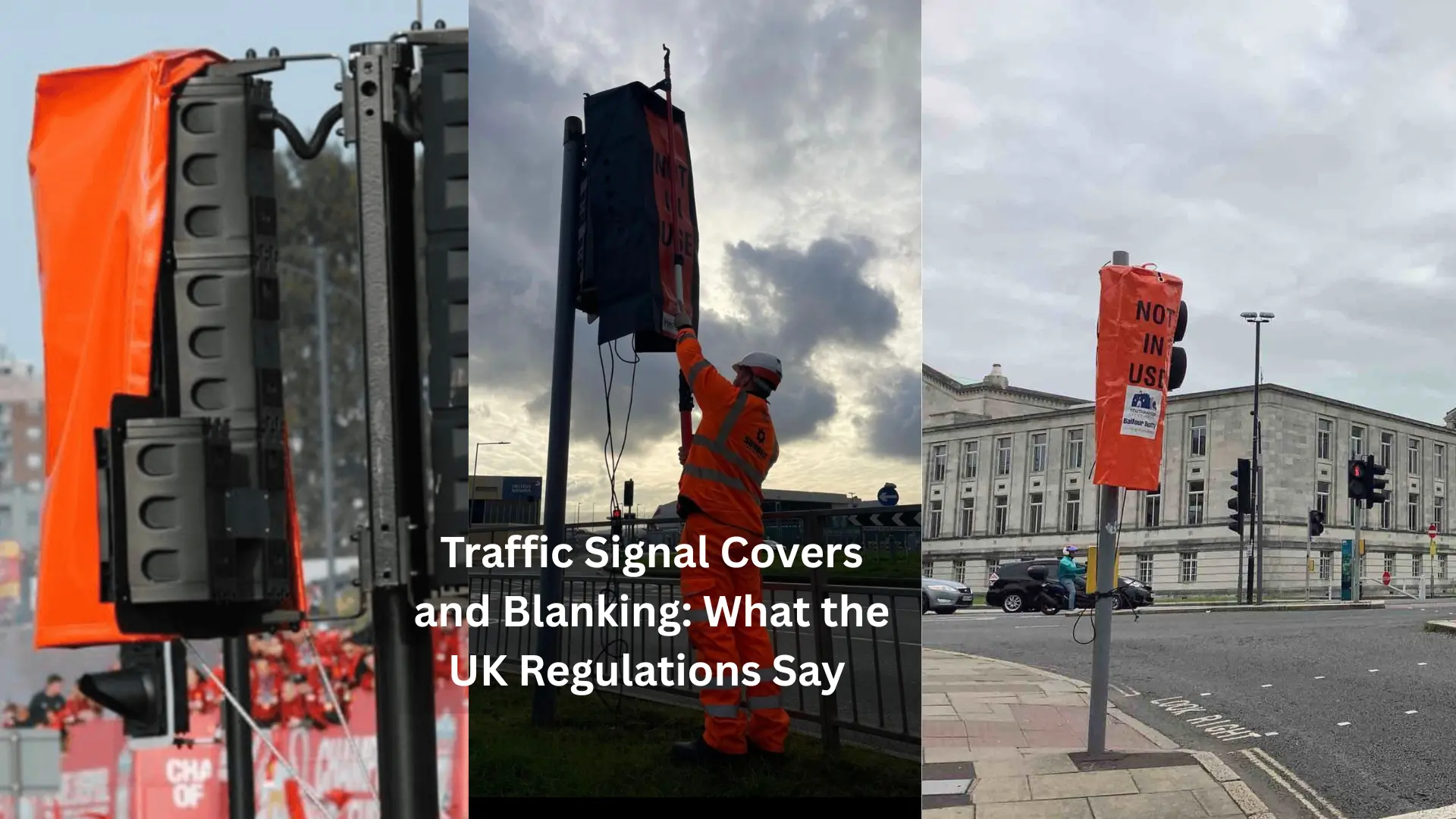
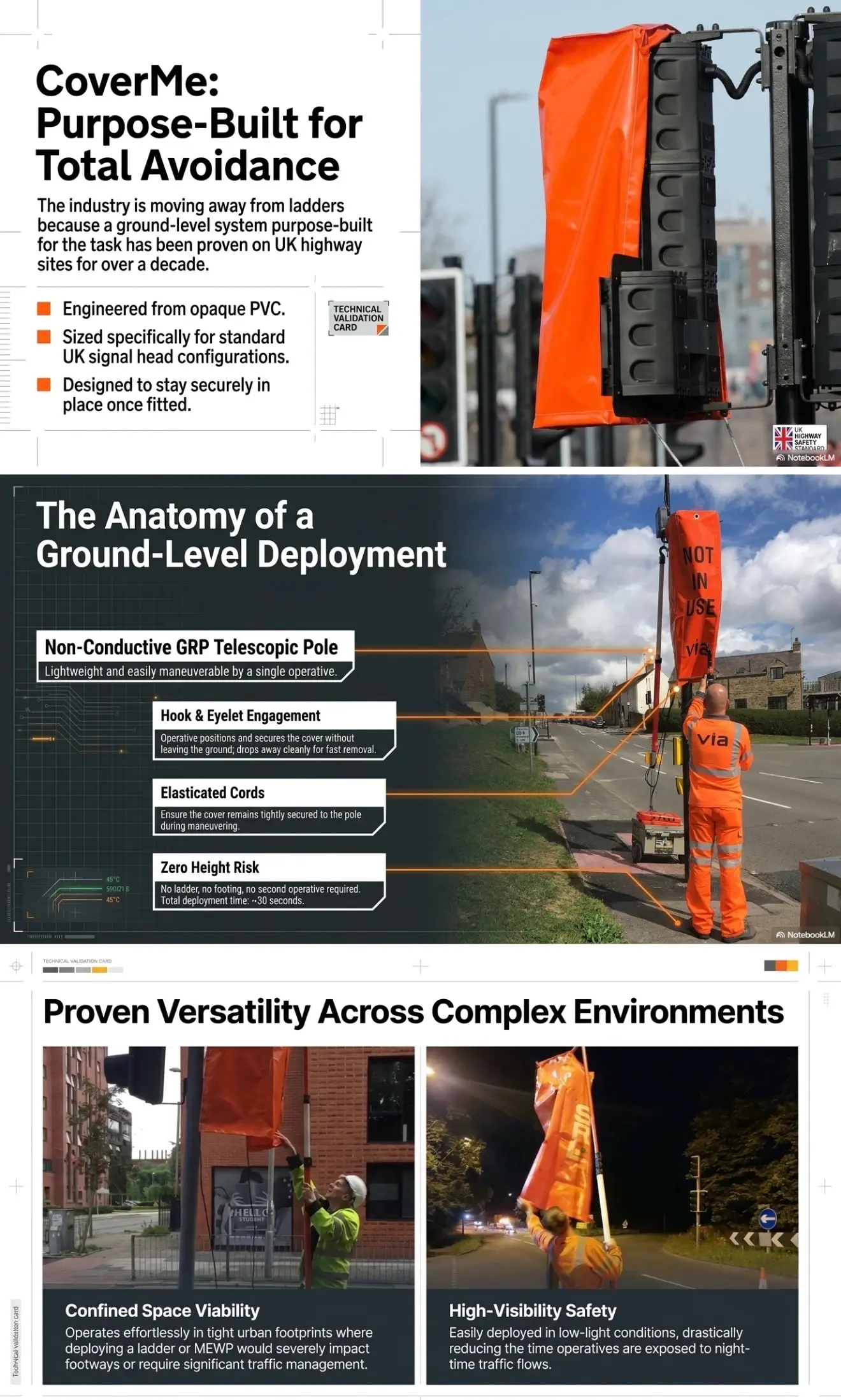
Traffic signals that are out of use for any significant period must be bagged, in line with ARTSM's national guidance on bagging and switch-off of signals. Where the closure is near a railway level crossing, the road signal and the crossing's own signal interlock are separate systems, and decommissioning the road signal must never touch the crossing's safety critical equipment. The standard method of reaching a signal head, which typically sits 2.5 to 3 metres up, has always been a ladder. A ground level, no ladders required system removes that step entirely, covering the signal head from the ground in under a minute in each direction.
UK Regulations and Standards Context
The Work at Height Regulations 2005 require employers to do everything reasonably practicable to prevent falls, and to select work equipment following a hierarchy that prefers eliminating the risk altogether over simply managing it. HSE's own guidance is explicit that avoiding work at height should always be the first option considered, not the last. CDM 2015 places a duty on the traffic management designer to eliminate or reduce foreseeable risks through design decisions, and on the principal contractor to plan, manage and monitor working at height activity on site.
Where a level crossing sits on the same corridor, the Office of Rail and Road is the enforcing authority for level crossing safety, and the crossing's signal interlock is engineered so the barriers cannot clear unless the road is fully closed. A TM crew working on the road signal has to be confident their method doesn't create any risk of interference with that interlock, which rules out anything that requires prolonged access at height right beside the crossing.
Falls from height remain one of the most common causes of workplace fatal injury in Great Britain, according to HSE's fatal injury statistics. Where a ground level alternative exists and is in active use across the UK, using a ladder when a contractor is aware of that alternative becomes very difficult to justify in a risk assessment.
The Operational Bottleneck
Here's the practical problem standard bagging methods create on an event or level crossing scheme: every ladder deployment adds setup and teardown time, and that time comes straight out of the road closure window. On an event transport plan, the closure only needs to run for as long as the crowd is actually dispersing, not for as long as it takes a crew to get a ladder up, bag the signal, then come back and repeat the process in reverse once the road can reopen.
Longer closures near a level crossing carry a second cost: they hold up the corridor precisely where disruption is least tolerable, in congested residential streets, for longer than the safety case requires. Event organisers pay for that in the form of extended road closure charges and knock on disruption costs. None of that additional time buys any extra safety margin, it's simply the cost of a slower method.
Real World Application
This isn't theoretical. A recent stadia concert transport plan needed to close a road during crowd dispersal, on a corridor that also carried a live railway level crossing. The team, led by Andrew McQuillan BA FdA CTRM UDip and Sophie Merivale of The Traffic Management Company, used IRSS UK's CoverMe ground level bagging system to take the road traffic signal out of service in under two minutes, and back into service just as fast, without any ladder access and without affecting the level crossing's own signal aspect.
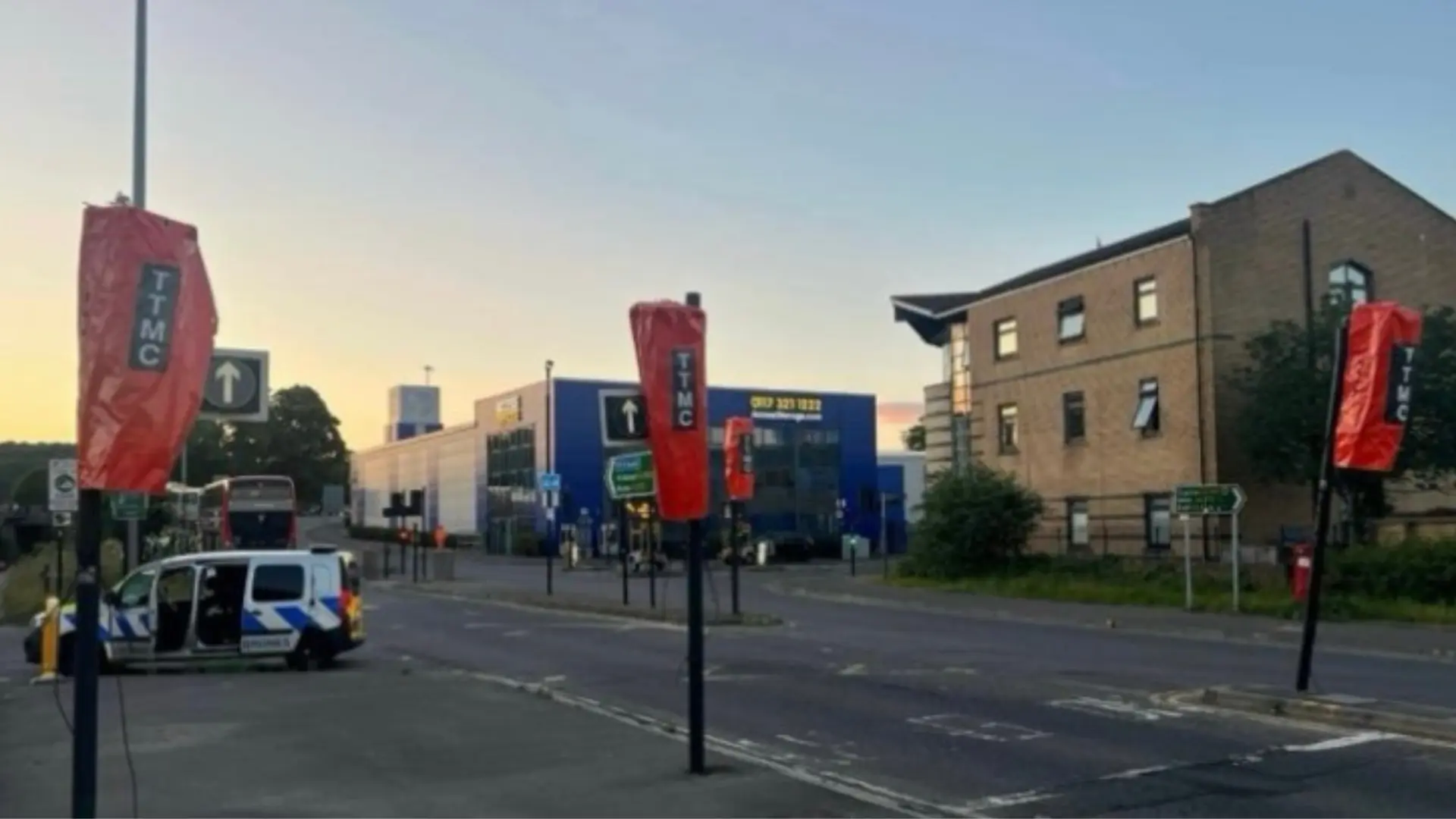
The result: the road closure window was kept to the minimum the event genuinely required, disruption to the surrounding residential area was reduced, and the event organiser avoided the cost of a longer closure. Read the full breakdown in our stadia concert case study.
Common Questions
Q: How do you safely take a traffic signal out of service near a level crossing?
A: Use a ground level bagging method that only interacts with the road signal head, keeping the level crossing's own signal interlock completely unaffected. This avoids any risk of interference between the two systems and removes the need for ladder access next to a live rail interface.
Q: Is it safe to use a ladder to bag off traffic signals during an event?
A: It's rarely the best available option. The Work at Height Regulations 2005 require employers to eliminate foreseeable height risks where reasonably practicable, and a ground level alternative that achieves the same result in under a minute is difficult to rule out in a risk assessment once you know it exists.
Q: How long does it take to bag off a traffic signal without a ladder?
A: A ground level, no ladders required system such as CoverMe can bag or unbag a standard signal head in under a minute per signal, as demonstrated on a stadia concert scheme where the full sequence took under two minutes.
Q: What does ARTSM guidance say about bagging off traffic signals?
A: ARTSM's national guidance confirms that signals out of use for any significant period must be bagged, and that the method used should be considered within the working at height regulatory framework, meaning ladder use should not be the default where a compliant ground level alternative exists.
Why It Matters
Every high risk closure near a level crossing or a busy event corridor carries two separate duties at once: keep the public safe during the closure, and keep the operative safe while creating it. A method that only satisfies one of those isn't good enough. Traffic management contractors and local authorities running schemes with rail interfaces or event dispersal plans should treat ladder-free signal covering as the default position, not a nice-to-have, particularly given ARTSM's own guidance already points that way.
Conclusion
Managing a high risk signal closure near a level crossing or a crowded event corridor comes down to speed and separation: get the road signal out of service fast, keep it completely clear of the crossing's own safety systems, and get it back in service just as quickly. A ground-level bagging method delivers all three without putting a worker up a ladder. If you're planning a scheme with a level crossing, a rail interface, or a high-footfall event corridor, talk to IRSS UK about CoverMe.