.svg)
Dedicated traffic light covers are safer and faster than bin bags for bagging off traffic signals on UK highways sites. A purpose-built cover such as the CoverMe system from IRSS UK can be installed from the ground in under 30 seconds per signal, with no ladder required, while a bin bag requires operatives to work at height, creating a legally significant risk under the Work at Height Regulations 2005. For traffic management contractors and local authorities, the choice is not simply a matter of preference: it has direct implications for operative safety, regulatory compliance, and site efficiency.
The Core Difference: Ground-Level Installation vs Working at Height
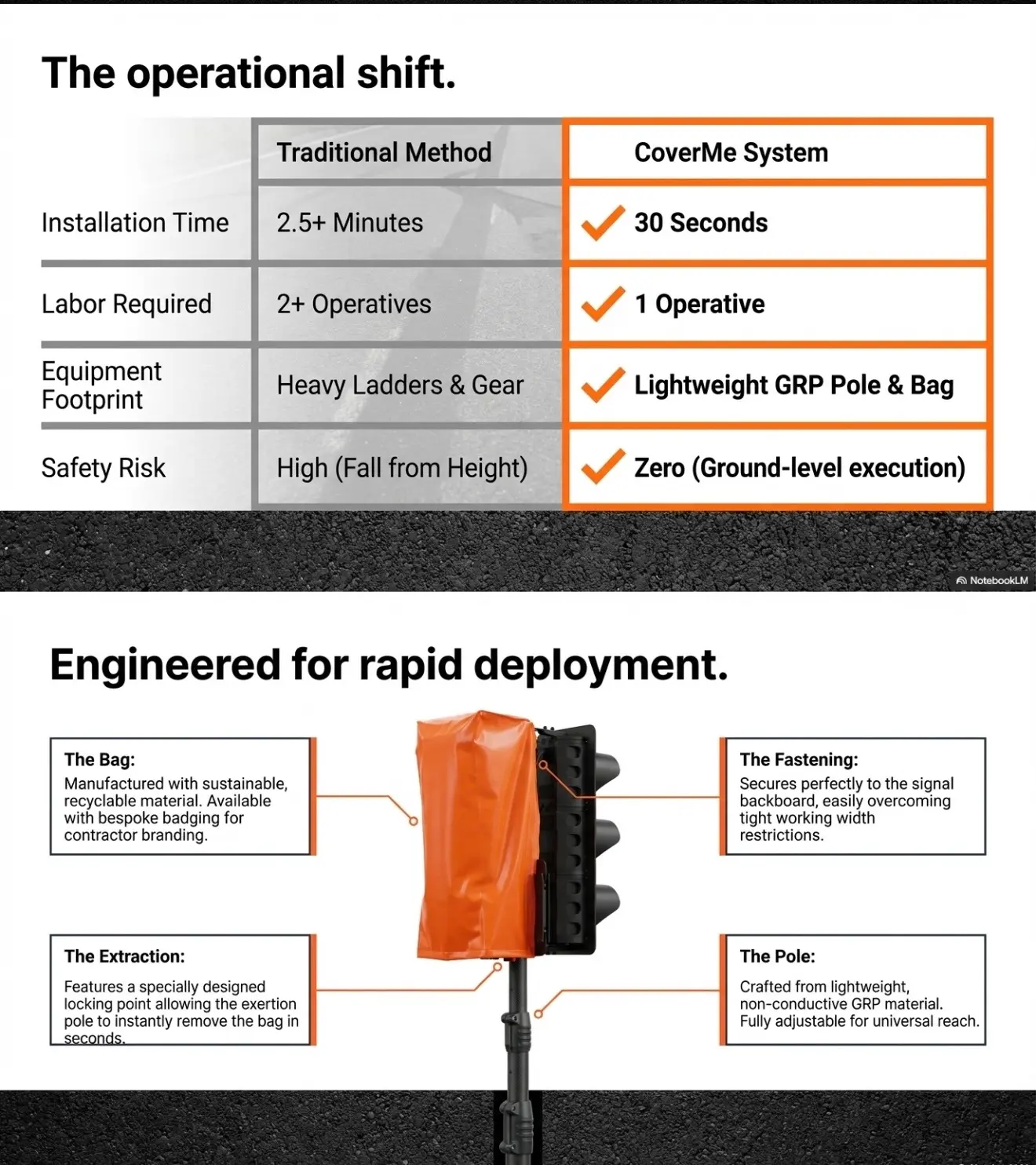
Bin bags have been the default method for bagging off traffic signals for over 30 years. The process requires an operative to climb a ladder to reach the signal head, fit the bag by hand, and descend, a sequence that must be repeated for every signal on site. Purpose-designed traffic light covers change this entirely.
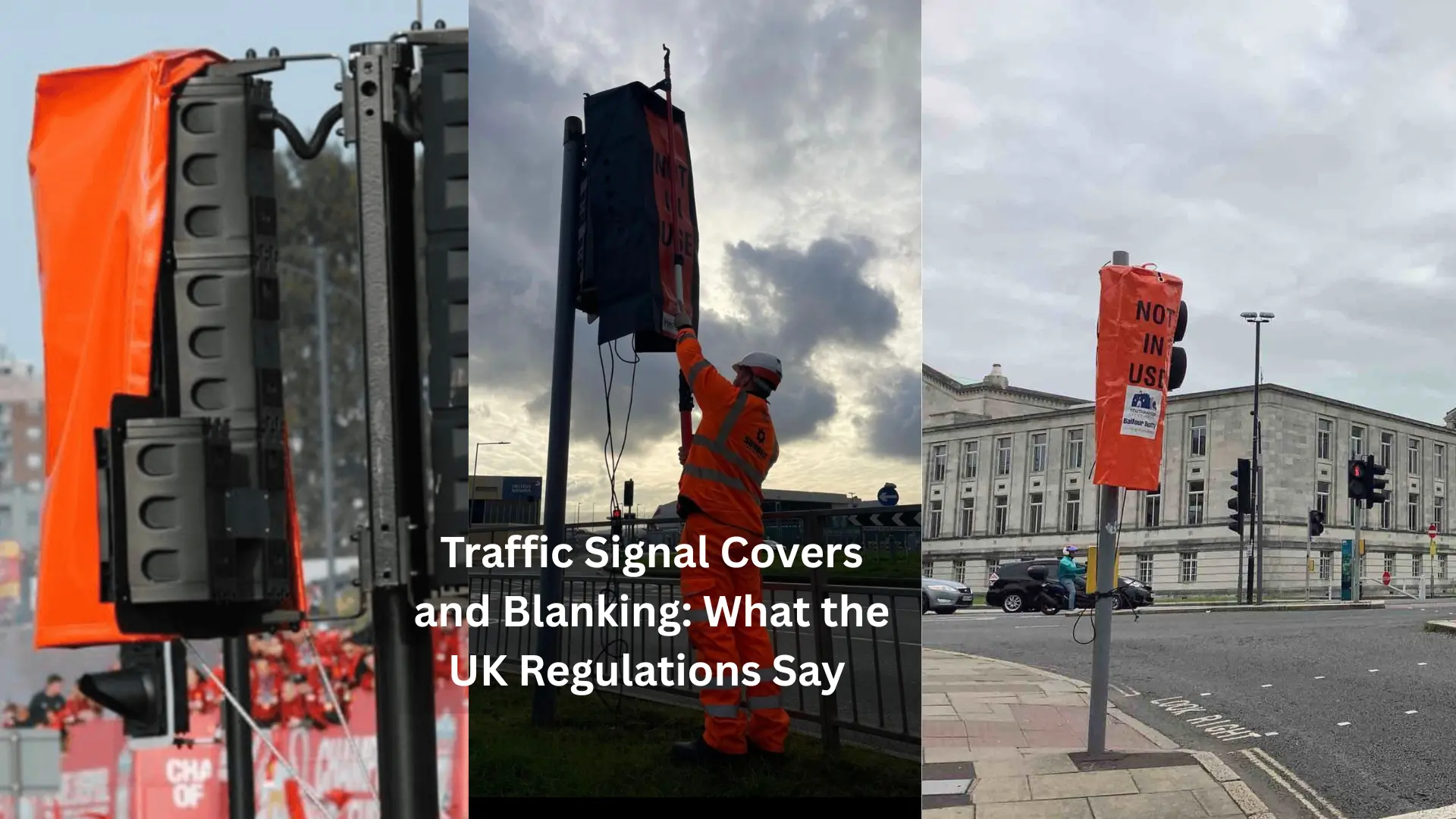
The CoverMe system from IRSS UK uses a simple extension pole to install and remove the bag from ground level. Installation takes approximately 30 seconds per signal. Removal is faster still, using a purpose-engineered locking point that allows the operative to release the cover without climbing. No ladder is required at any stage. This eliminates working at height as a task category for bagging off entirely.
There is a measurable workforce benefit too. Removing the ladder requirement means operatives from the wider highways pool can undertake bagging off without specialist ladder training, increasing site flexibility and reducing dependency on specific personnel.
UK Regulations and What They Require
The Work at Height Regulations 2005, enforced by the Health and Safety Executive (HSE), apply to any task where a person could fall and suffer injury — regardless of the height involved. Under these regulations, employers must first consider whether work at height can be avoided altogether. Where it cannot be avoided, appropriate equipment and supervision must be provided.
The HSE guidance is clear: a ladder should only be used when a risk assessment has demonstrated that equipment offering a higher level of fall protection is not justified. For a task such as bagging off traffic signals, where a ground-level alternative now exists, using a ladder when a safer option is available could be difficult to justify in a risk assessment.
The Construction (Design and Management) Regulations 2015 (CDM 2015) also apply to highways works. They require principal contractors to manage high-risk activities including working at height, and to ensure that risks are eliminated or reduced so far as is reasonably practicable. IRSS UK, was part of the working group to help bring about change in the national best practice guidance on bagging off with ARTSM (Association for Road Traffic Safety and Management), played a part in shaping how the industry approaches this task safely.
ARTSM’s guidance on bagging and switch-off of signals confirms that when signals are not in operation for any significant period, they must be bagged. The method used to do so carries health and safety implications that responsible contractors cannot overlook.
How Dedicated Traffic Light Covers Work in Practice
The CoverMe traffic light bag is a high-visibility PVC cover engineered specifically for the dimensions of standard UK traffic signal heads. Installation requires one operative and one extension pole. The bag is positioned over the signal head from ground level, secured at the locking point, and confirmed in position — all in a single smooth motion.
Removal is equally straightforward. The extension pole engages the locking point and releases the bag in seconds, with no manual handling at height.
The covers are manufactured from recyclable PVC and are reusable across multiple deployments, providing a cost-effective and environmentally responsible alternative to single-use black bin bags. Siemens adopted the CoverMe system for rail sign coverage after 15 years of using bin bags, finding a solution that met operational needs without the litter and environmental waste associated with disposable bags.
The system has been adopted by major industry operators including SRL Traffic Systems, which incorporated CoverMe bags into its exclusive switching service for permanent traffic signal decommissioning.

Common Questions
Are bin bags acceptable for bagging off traffic lights on UK highways sites?
Bin bags are not prohibited outright, but their use requires operatives to work at height using ladders. Under the Work at Height Regulations 2005, this must be justified by a risk assessment. Where a safer ground-level alternative exists, such as a purpose-built traffic light cover, using ladders instead is increasingly difficult to defend.
How long does it take to bag off a traffic signal with a dedicated cover?
The CoverMe system installs in approximately 30 seconds per signal from ground level using an extension pole. Removal is faster still. By comparison, the traditional ladder-and-bin-bag method involves assembling ladder equipment, climbing, fitting the bag, and descending, a significantly longer process per signal.
Do dedicated traffic light covers comply with UK highways standards?
Yes. IRSS UK worked directly with ARTSM to develop national best practice guidance on bagging off traffic signals. CoverMe is designed for compliance with the requirements set out in ARTSM guidance and aligned with CDM 2015 and the Work at Height Regulations 2005.
Can any operative use a dedicated traffic light cover, or is specialist training needed?
One of the key advantages of the CoverMe system is that it removes the requirement for ladder training. Any operative from the highways workforce pool can bag off signals safely using the extension pole, broadening the available labour pool and reducing training overhead on site.
Why the Method Matters: Risk, Compliance, and Efficiency
Falls from height remain one of the leading causes of fatal and serious injuries in the UK construction and highways sectors. The HSE’s enforcement position is clear: where a safer method exists and is reasonably practicable, employers are expected to use it. Choosing bin bags over purpose-built covers on a highways site is not simply a procurement decision, it is a risk management decision with potential legal consequences.
Beyond compliance, there is a practical efficiency case. Faster installation and removal reduce time on site. Fewer operatives are exposed to live traffic for shorter durations. Reusable covers reduce consumable costs over time. And the removal of ladder logistics simplifies site operations, particularly in constrained urban environments.
For local authorities and traffic management contractors seeking to demonstrate due diligence on working at height risk, the shift from bin bags to dedicated covers is the most straightforward improvement available.
Make the Switch to Safer Bagging Off
The comparison between traffic light covers and bin bags is, ultimately, a comparison between a method designed for the task and one that was never designed for it at all. Purpose-built covers are faster, safer, fully reusable, and aligned with UK regulatory requirements. Contact IRSS UK to discuss CoverMe for your traffic management operation.