.svg)
Ladder work on highway sites has been the default for decades. But in traffic management, the default is no longer acceptable. The Work at Height Regulations 2005 are clear: if a task can be done from the ground, it must be. This guide sets out the safer alternatives available to UK traffic management teams today, what they are, how they work, and what the law requires.
The Problem with Ladders on Highway Sites
Most traffic management teams still use ladders for bagging off signal heads. It is quick to reach for, familiar, and requires no specialist kit. The problem is the risk profile.
A ladder beside a live carriageway puts an operative at height and in proximity to moving vehicles simultaneously. There is no collective protection. If the ladder slips, if the operative overreaches, or if a vehicle gets too close, the consequences are serious.
Falls from height remain the leading cause of fatal workplace injuries in Great Britain. According to the Health and Safety Executive, falls from height accounted for 36% of all worker fatalities in 2023/24. In construction and highways environments, ladders are involved in more than half of those deaths. The question for any traffic management company is not just whether ladder use is managed, it is whether it is necessary at all.

What the Work at Height Regulations 2005 Actually Require
The Work at Height Regulations 2005 set a clear hierarchy of control. Most teams are familiar with the concept but stop short of applying it properly. The hierarchy runs in strict order.
- First, avoid work at height entirely. If the task can be done from the ground, do it from the ground. Cost or convenience is not a valid reason to skip this step.
- Second, prevent falls, where height work cannot be avoided, use collective fall prevention equipment: scaffolding, permanent platforms with edge protection, guardrails. Third, minimise the consequences of a fall using personal fall arrest systems. This is the last resort, not the first.
Safer Alternatives: What Is Available on UK Highway Sites
The hierarchy is not just theory. Practical, proven alternatives to ladder work exist across the main tasks where height risk arises in traffic management.
Ground-Level Signal Covers
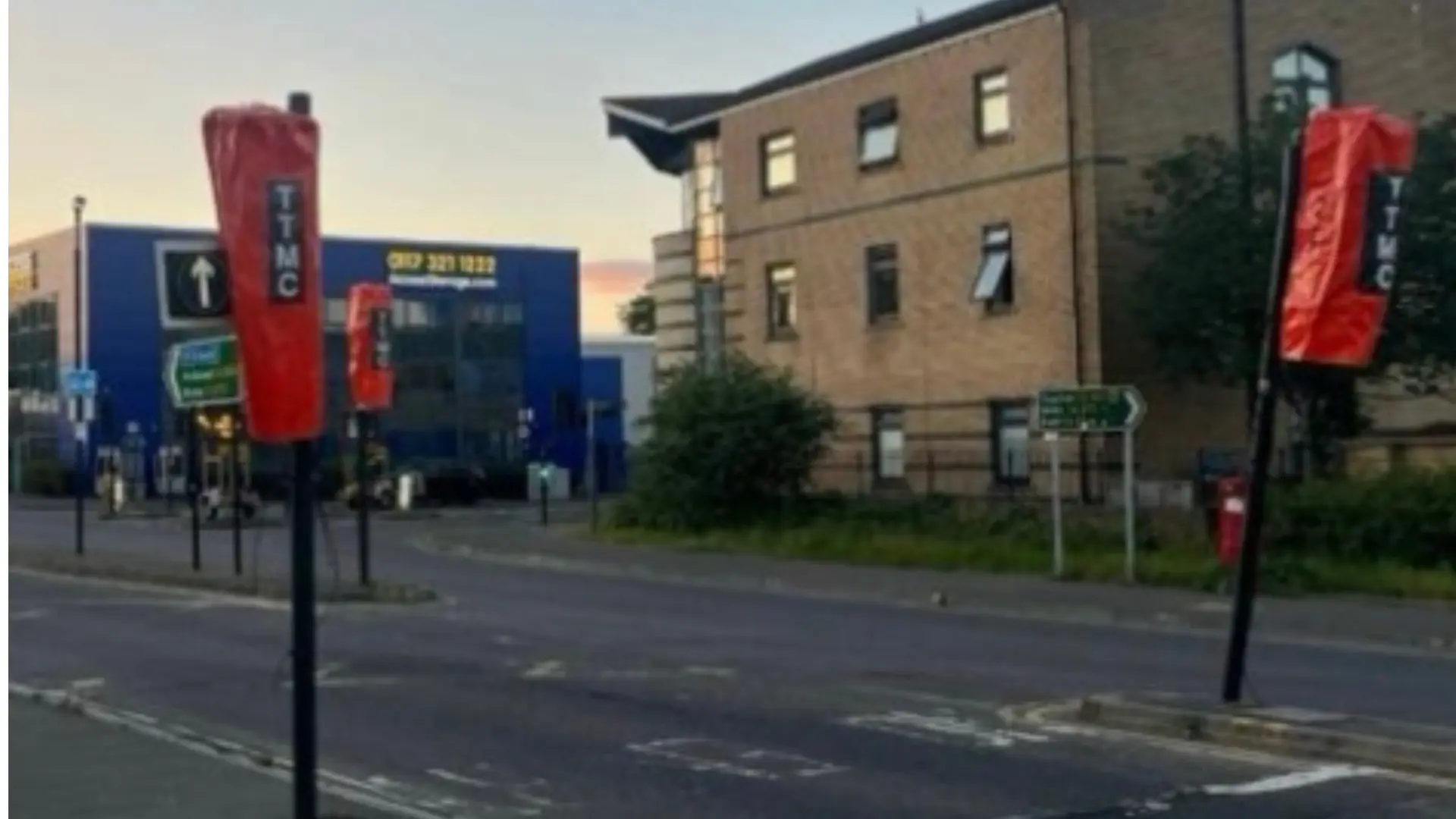
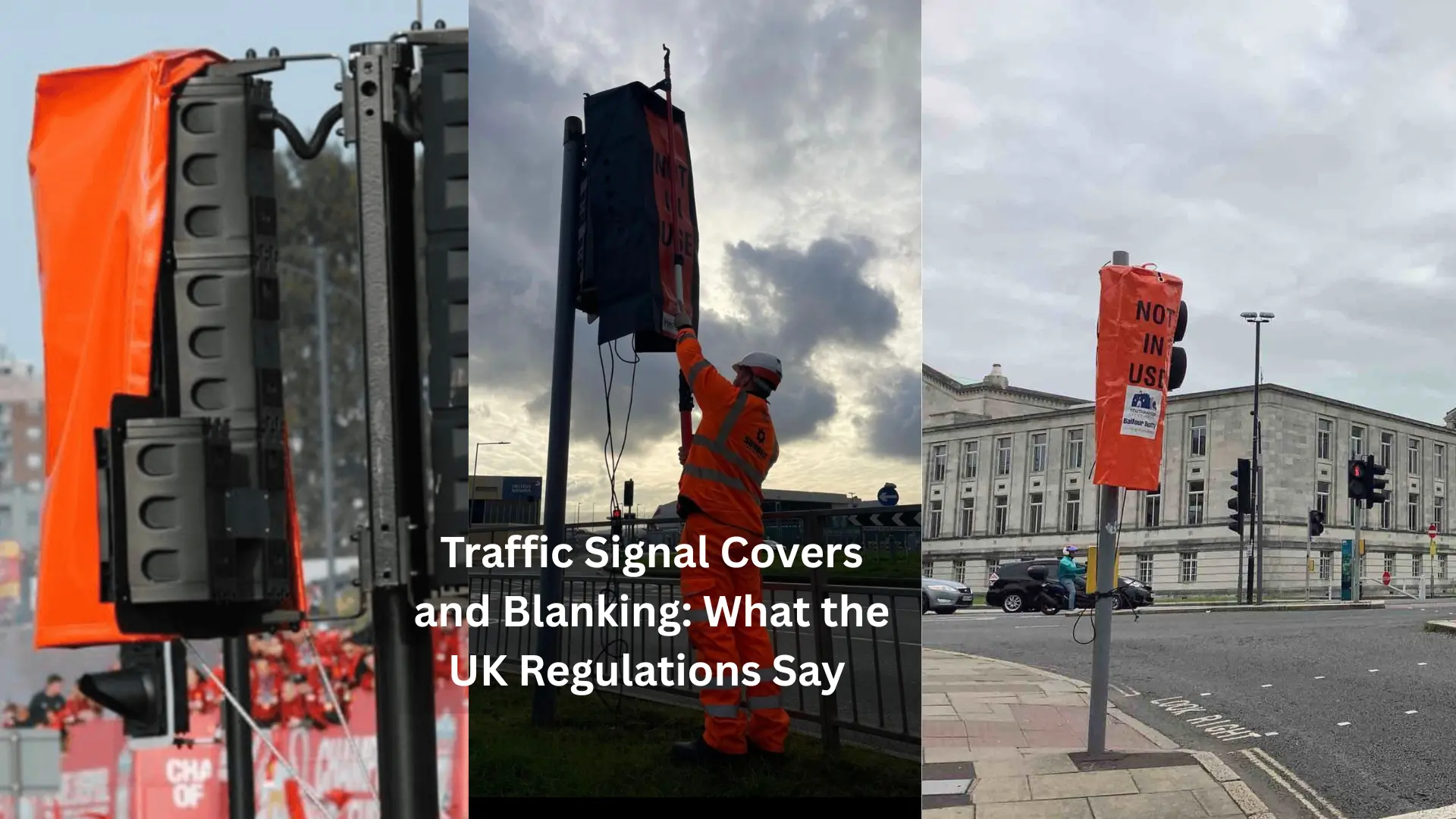
The most common reason operatives climb ladders on signal sites is to bag off permanent signal heads when taken out of service. CoverMe traffic light covers from IRSS UK eliminate this entirely. The system uses an extension pole to fit purpose-made PVC covers over standard UK signal heads from the ground. No ladder. No MEWP. No IPAF certification required. A single operative can fit a cover in under a minute per head.
Based on over 25 years of highway industry experience, Peter Hoban founder of IRSS UK and co-author of the ARTSM national best practice guidance on bagging off, designed CoverMe specifically to address this gap. In real world deployment, setup time has reduced from approximately four minutes per signal head to around 30 seconds.
Extension Pole Tools
For tasks requiring access to elevated equipment without being physically at height, extension pole systems offer a straightforward ground-level alternative. The HSE guidance specifically references extension poles as a valid avoidance measure under the hierarchy of control. For traffic management, this applies directly to signal head access.
MEWPs as a Managed Alternative : Not a First Choice
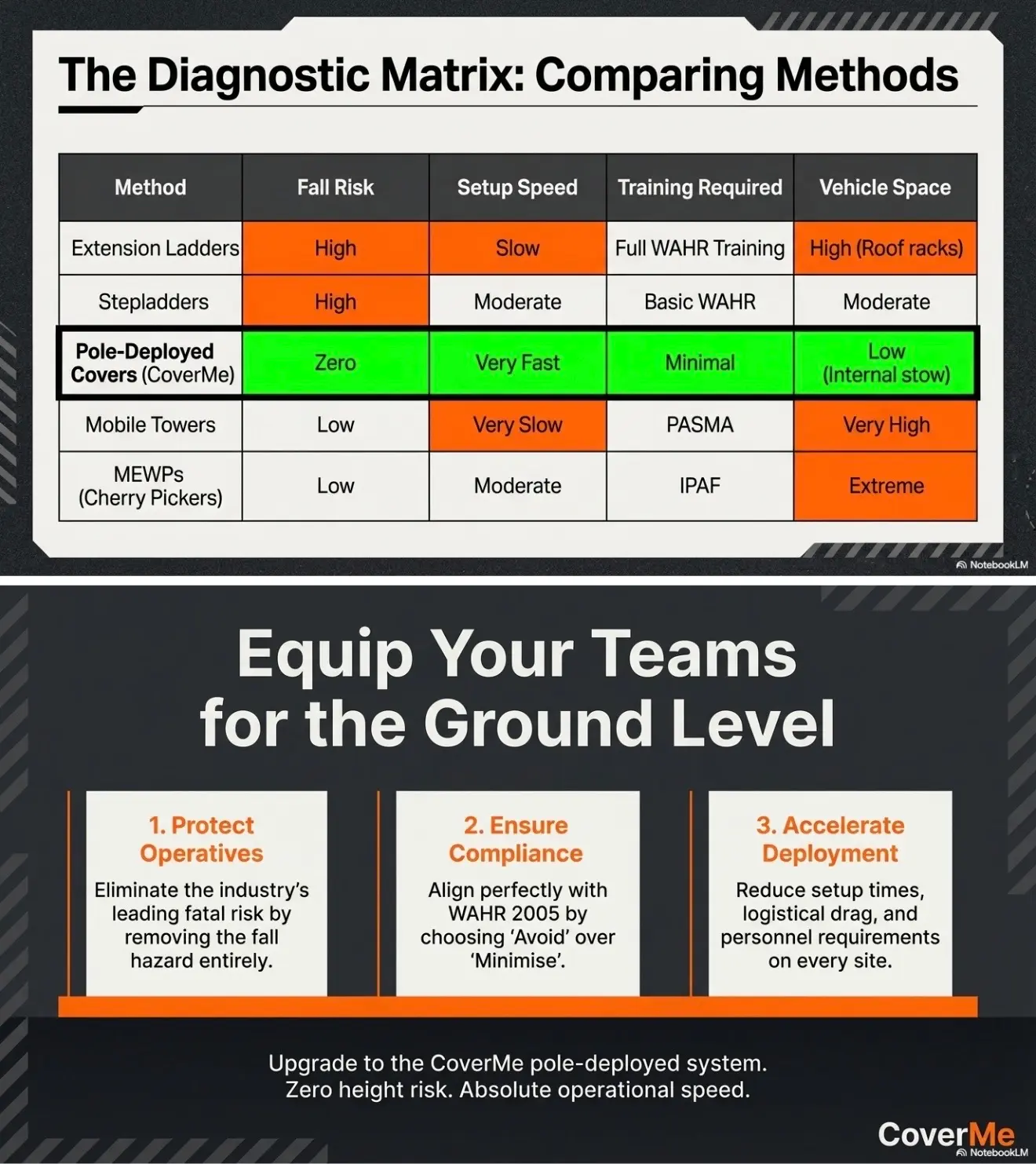
Mobile Elevated Work Platforms are sometimes positioned as the safe alternative to ladders. They are safer, but they are prevention, not avoidance. Under the hierarchy, avoidance must come first. MEWPs require IPAF certification, planned site access, outrigger stabilisation, and additional traffic management around the platform. For routine bagging off, where a ground-level system exists, MEWP use is disproportionate and difficult to justify.
Comparing the Options
What ARTSM Guidance Says
IRSS UK was part of the ARTSM working group to bring about changes by creating the ARTSM national best practice guidance on bagging off traffic signals. The guidance requires that permanent signals not in use are bagged. It does not prescribe ladders as the method. Traffic management companies that continue using ladders for routine bagging off, when a ground-level alternative is available, face increasing difficulty defending that position from a regulatory and contractual standpoint.
Use our coverage calculator to estimate how many CoverMe covers your next scheme will need.
Common Questions
Is it legal to use a ladder to bag off traffic signals in the UK?
There is no specific prohibition on ladder use for this task. But the Work at Height Regulations 2005 require that height work is avoided where reasonably practicable. If a ground-level system achieves the same outcome, using a ladder instead is difficult to justify. Avoidance is at the top of the hierarchy, not risk management.
Do ground-level signal covers meet ARTSM bagging off requirements?
Yes. ARTSM requires that signals not in use are bagged. The guidance does not specify the method. Purpose-made covers installed from ground level fully satisfy the requirement and are consistent with best practice co-developed by IRSS UK.
What training do operatives need to use CoverMe?
No ladder training or IPAF certification is required. Operatives can be trained quickly, and the task is accessible to the general highways workforce — not restricted to those with specific ladder competency. This widens the available pool on every scheme. Check out our Best Practice Document for Bagging Off.
How to Bag Off from ground Level Safely using CoverMe
- STEP ONE
- Extend pole to correct height.
- STEP TWO
- Insert hook at end of pole into the eyelet and lift cover away so it disengages.
- STEP THREE
- Slowly lower the extention pole
Can ground level covers be used on all standard UK signal heads?
CoverMe is designed to fit standard UK signal head configurations. The IRSS UK team can advise on specific signal types and non-standard configurations before deployment.
What happens if an operative is injured using a ladder when a safer method was available?
Liability falls on the employer or principal contractor. Under the Work at Height Regulations, failing to implement a higher-level control when one is reasonably practicable is a breach. Civil liability and HSE enforcement action are both foreseeable consequences.
The Key Takeaway
The law is not ambiguous. The hierarchy of control starts with avoidance. In traffic management, avoidance of height risk during bagging off is achievable today, on every site, with a system proven in real-world UK deployments and backed by ARTSM guidance. Speak to the IRSS UK team about specifying CoverMe into your next scheme.
The IRSS Cover Me range includes:
- Belisha Beacon Covers
- Road Sign Covers
- Street Furniture Covers
- Street Lighting Covers
- Traffic Light Covers