.svg)
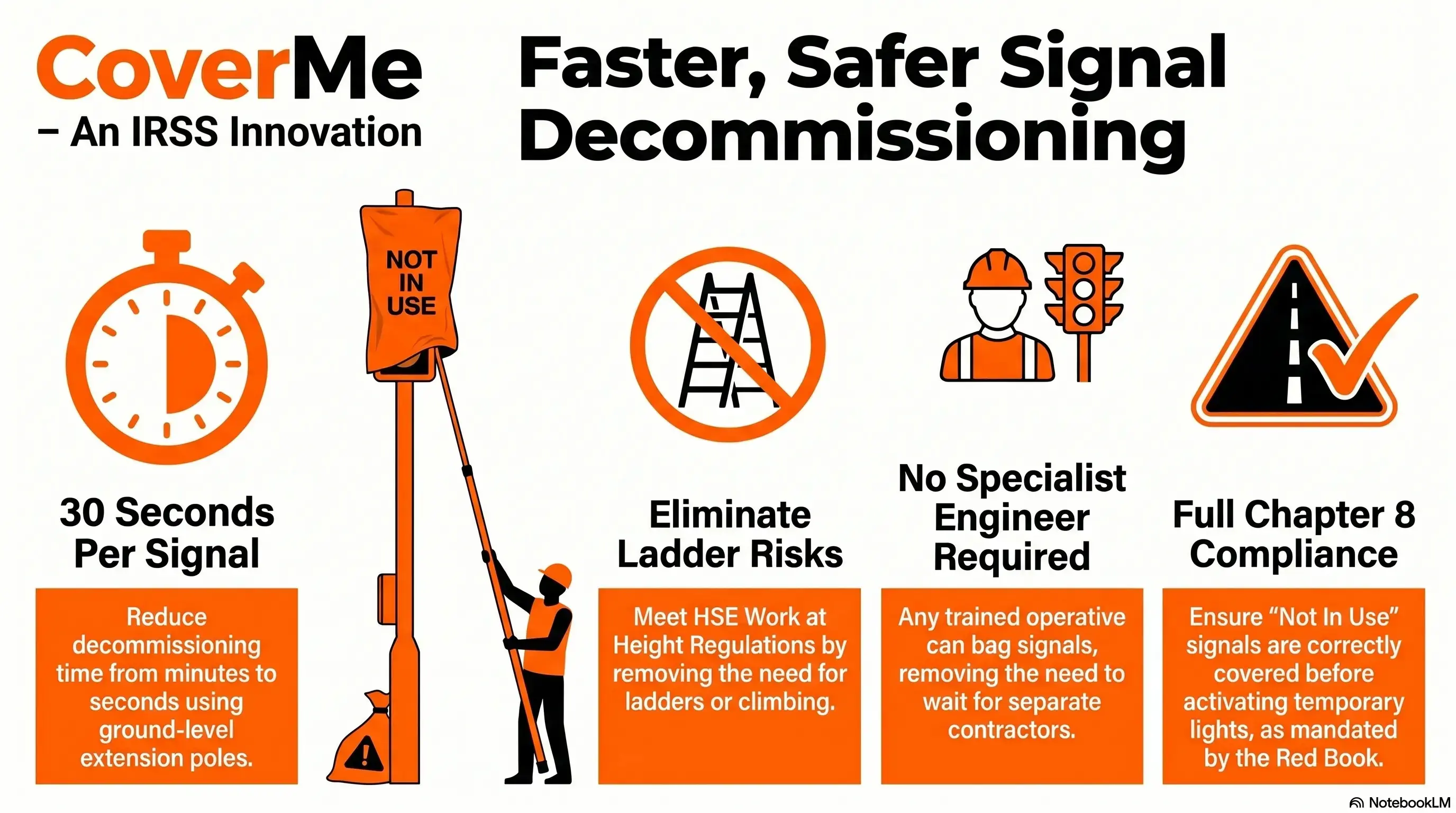
The fastest way to set up traffic management equipment safely on a UK highways site is to follow the correct sequence, advance signing first, then cones and guarding, then signal decommissioning and bagging off, using purpose built equipment that eliminates working at height at every stage. For contractors working under Chapter 8 of the Traffic Signs Manual and the Safety at Street Works and Road Works Code of Practice (the Red Book), speed and safety are not in conflict: a well prepared crew with the right kit will always outperform one improvising with inadequate equipment. IRSS UK’s CoverMe system, removes the most time consuming and dangerous step in the process, bagging off permanent traffic signals, reducing it to 30 seconds per signal with no ladder required.
IRSS were part of a working group that helped implement changes through ARTSM best practices, to make it safer and clearer when bagging and switching off electrical equipment.
The Correct Setup Sequence Under Chapter 8
Chapter 8 of the Traffic Signs Manual, alongside the Red Book, defines how temporary traffic management (TTM) must be established on UK highways. The sequence is non negotiable: no works equipment may be placed in the carriageway until advance signing is in position.
The correct order of setup is:
- Park and make the vehicle visible: amber beacons active, vehicle positioned safely before any unloading begins.
- Advance signs: place warning signs approaching from all directions, at spacings determined by road type and speed limit.
- Lead-in taper: lay cones in sequence, working with traffic flow, to guide vehicles away from the works area.
- Safety zone and working space: establish the protected area around the works, ensuring adequate clearance from moving traffic.
- Decommission permanent signals: where temporary signals replace permanent ones, permanent signals must be switched off and bagged before temporary signals are activated.
- Activate temporary signals: once permanent signals are decommissioned and covered, temporary portable signals can be brought into operation.
The Red Book is clear: work must not start until the right equipment is set up correctly. For emergency works, full signing, lighting and guarding must be provided as quickly as possible, but the sequence still applies.
Where Time Is Most Often Lost on Site
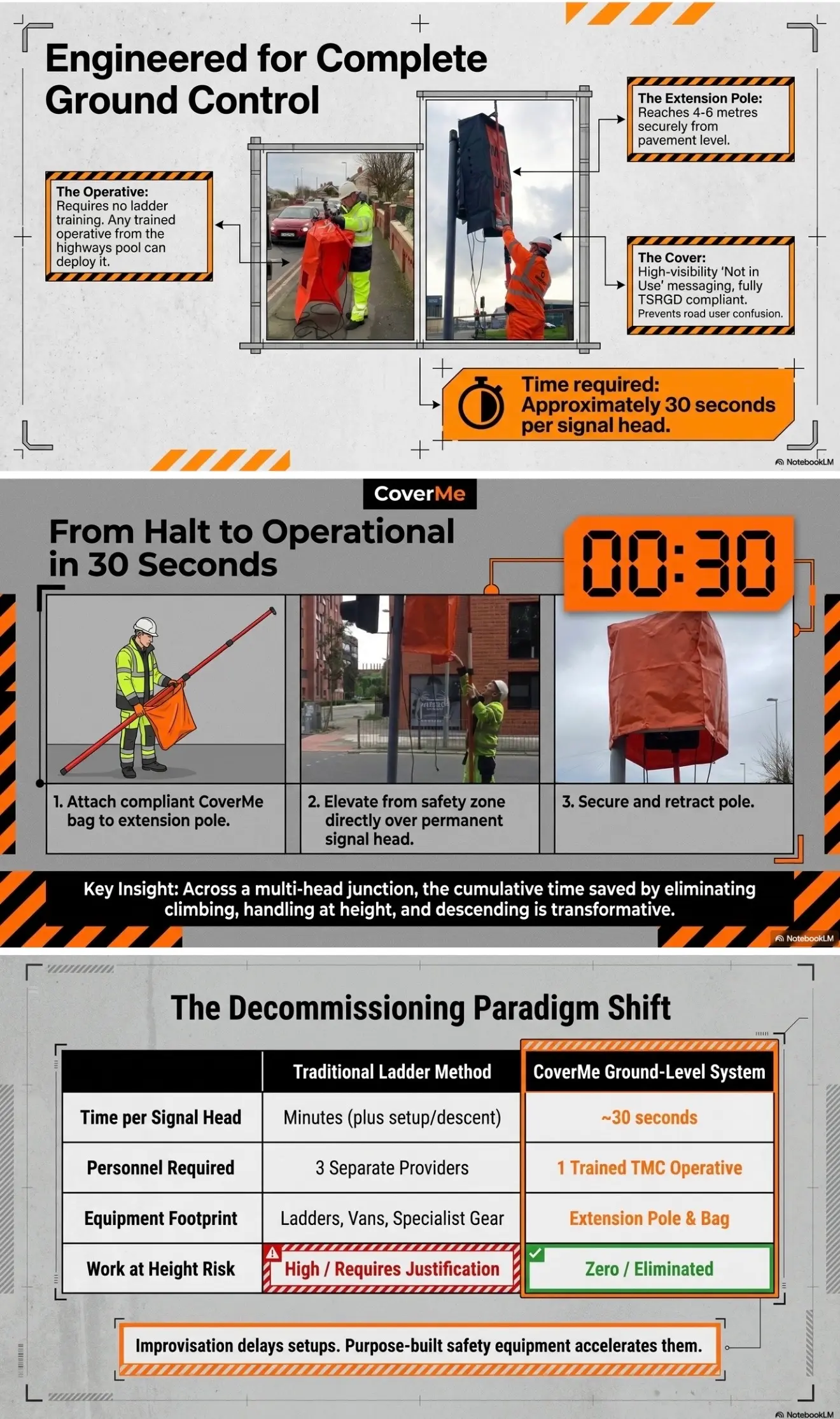
For most TTM operations, the bottleneck is not the coning or signing, it is the decommissioning of permanent traffic signals. The traditional process requires a specialist signal engineer to attend site separately, access the signal cabinet, switch off the signals, and then climb a ladder to heights of between 4 and 6 metres to bag each signal head individually.
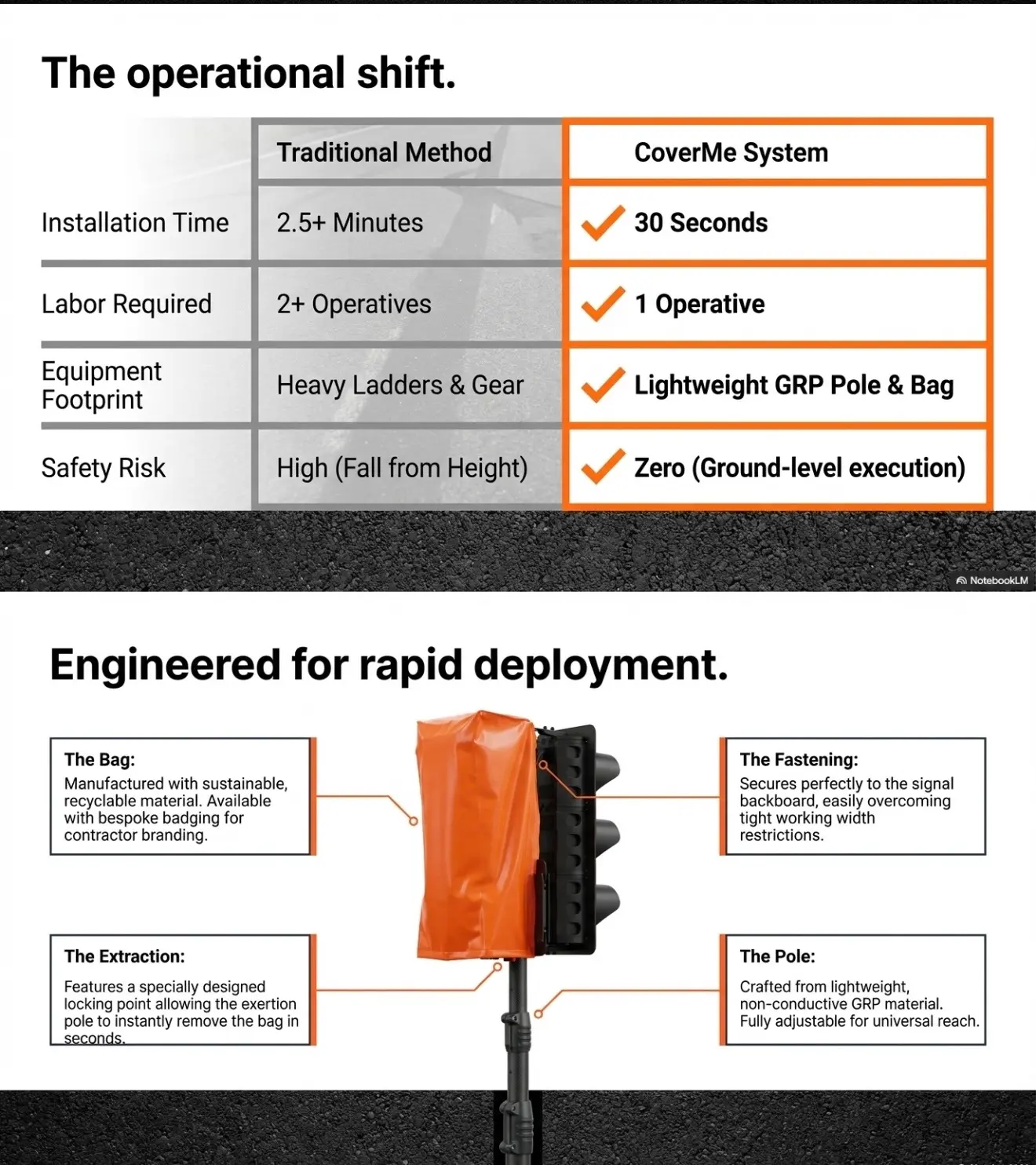
This creates three distinct delays: waiting for the engineer to arrive, waiting for each signal to be climbed and bagged, and, if the engineer is unavailable, the entire site setup is stalled. As SRL Traffic Systems documented in their partnership with IRSS UK, the old model required three separate providers on site before works could begin: a traffic management company, a temporary light supplier, and a signal engineer.
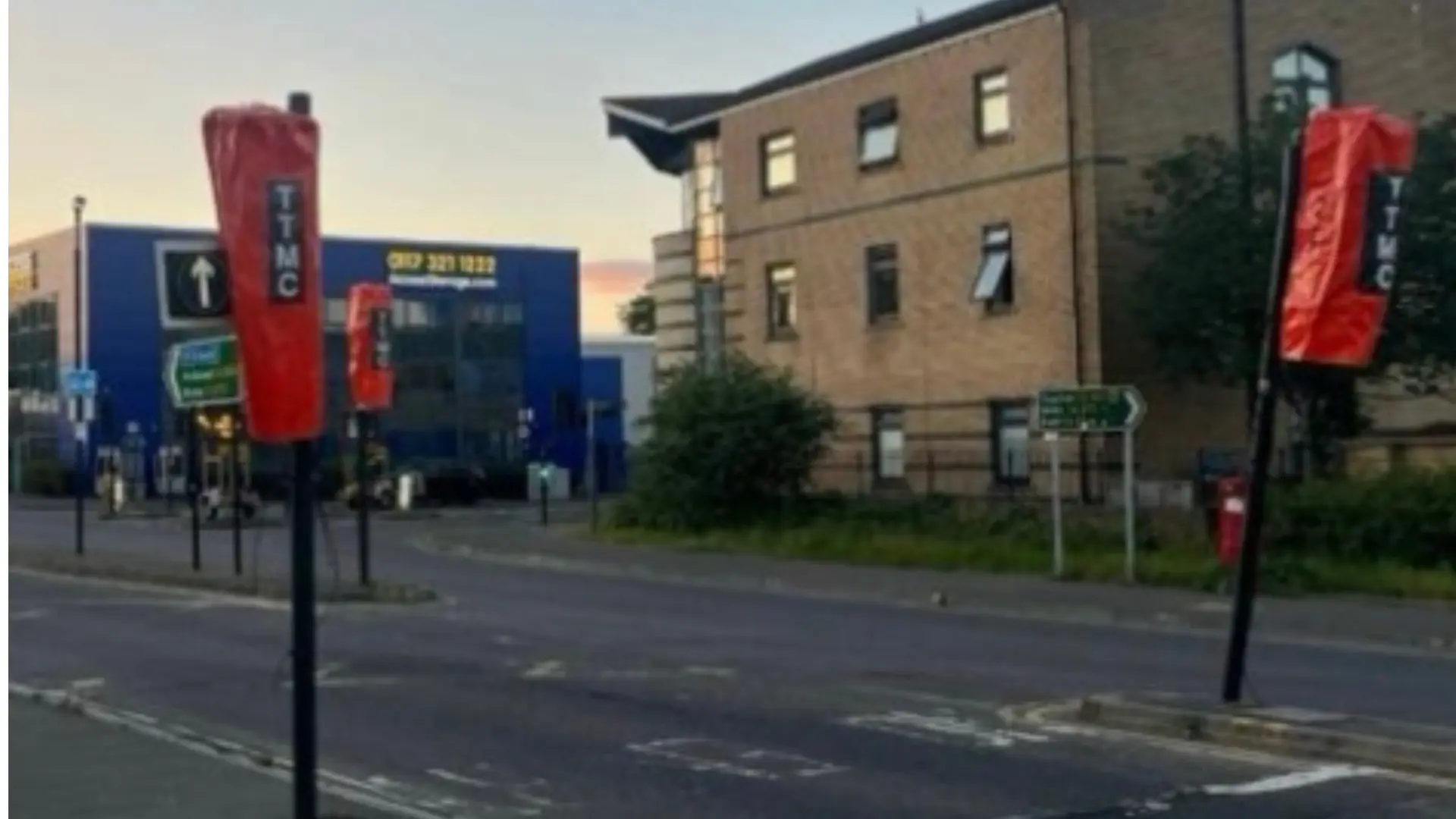
The CoverMe system from IRSS UK, developed by Peter Hoban following 25 years in the highways industry, eliminates the ladder stage entirely. Using an extension pole from ground level, a trained operative can bag a signal head in approximately 30 seconds. Twelve permanent signals were bagged at a Colas Group site on Dewsbury Road, Leeds, using this method, with zero working at height risk, before temporary lights were activated and works could begin.
UK Regulatory Requirements for Signal Decommissioning
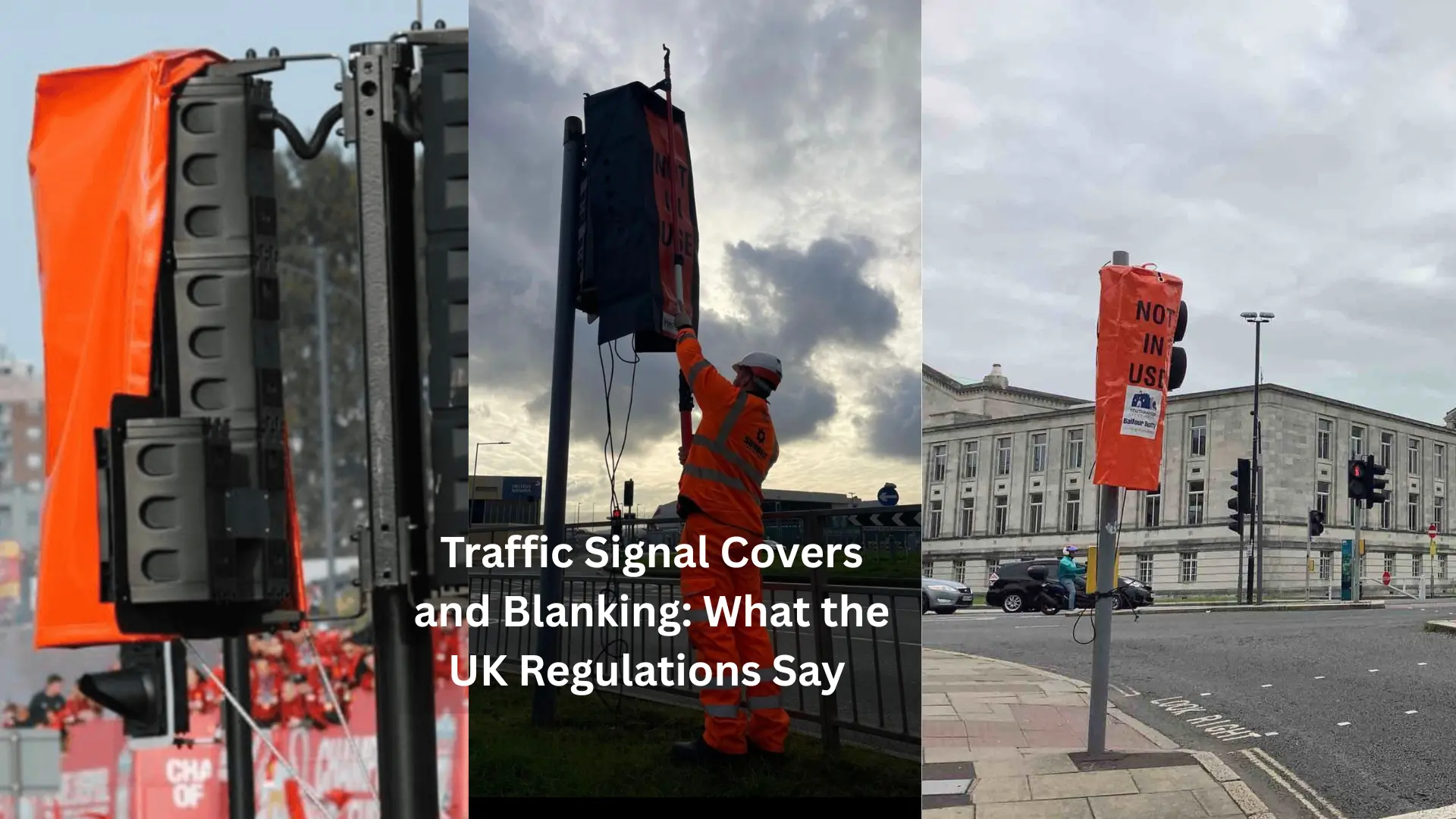
ARTSM’s guidance on bagging and switch-off of signals, to which IRSS UK was part of the ARTSM working group, is clear that when traffic signals are not in operation for any significant period, they must be bagged. The guidance also confirms that portable signals must comply with the Traffic Signs Regulations and General Directions (TSRGD) 2016, and that the Traffic Management designer acts as a Designer under CDM Regulations 2015.
The Work at Height Regulations 2005, enforced by the HSE, require employers to eliminate working at height wherever it is reasonably practicable to do so. Where a ground-level method of bagging signals exists and is available, using a ladder instead would be difficult to defend under a risk assessment. The HSE is clear: a ladder should only be used when a risk assessment demonstrates that equipment offering a higher level of fall protection is not justified. For signal bagging, a task now achievable from the ground, that justification is no longer available to contractors who are aware of the alternative.
Common Questions
What is the correct order for setting up traffic management equipment on a UK highway?
Under Chapter 8 of the Traffic Signs Manual and the Red Book, advance warning signs must be in place before any equipment enters the carriageway. The sequence then follows: lead-in taper, safety zone, works area, and, where permanent signals are present, switch-off and bagging before temporary signals are activated.
Can any operative bag off a traffic signal, or is a specialist engineer required?
With the CoverMe system from IRSS UK, any trained operative from the highways pool can bag off a signal head from ground level using an extension pole. No ladder training or specialist signal engineer is required for the bagging stage, significantly reducing dependency on scarce specialist resource.
How long does it take to bag off permanent traffic signals before temporary lights can be activated?
Using the CoverMe system, each signal head takes approximately 30 seconds to bag from ground level. Using the traditional ladder method, each signal requires climbing, handling at height, and descent, making the CoverMe approach substantially faster across a multi-head junction.
What happens if permanent signals are not bagged before temporary signals are activated?
ARTSM guidance and the Red Book both require that permanent signals not in use are bagged. Leaving signals unbagged when they are not in operation creates confusion for road users, is non-compliant with guidance, and may expose the contractor to liability in the event of an incident.
Why Equipment Choice Directly Affects Setup Speed and Safety
The fastest TTM setups share a common characteristic: purpose built equipment that requires no improvisation. Chapter 8 mandates that traffic signs and apparatus must conform to TSRGD requirements, but beyond compliance, the right equipment directly reduces time on site and time during which operatives are exposed to live traffic.
Every additional minute spent in the carriageway during setup is a minute of unnecessary exposure. Equipment that is difficult to handle, requires specialist skills, or depends on separate contractors attending site extends that exposure window. CoverMe’s ground level bagging approach removes one of the most risk-laden tasks from the setup sequence without adding complexity elsewhere.
For local authorities and traffic management contractors managing multiple sites or responding to emergency works, the ability to bag signals without a specialist engineer and without ladders directly accelerates the point at which a site can be made safe and works can legally begin.

Get Set Up Faster: Without Cutting Corners
Setting up traffic management equipment safely and quickly is an achievable goal when the right sequence is followed and the right equipment is in use. IRSS UK’s CoverMe range, developed by highways industry veteran Peter Hoban and co-developed with ARTSM, provides the ground-level bagging solution that removes the most significant bottleneck from the TTM setup process. Contact IRSS UK to find out more or to discuss your site requirements.